 Dr. Amy Bakelaar
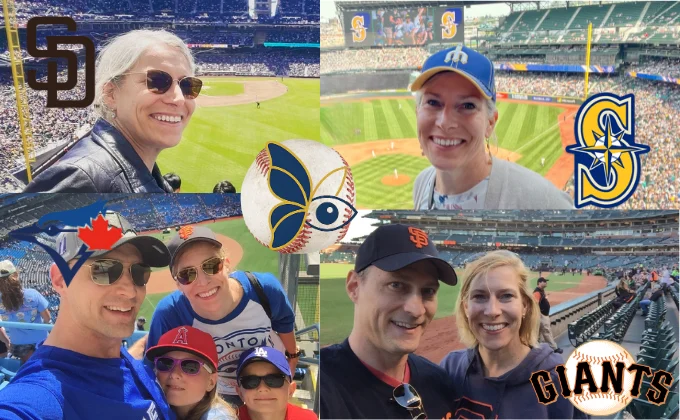

As both an optometrist and a lifelong Toronto Blue Jays fan, I’ve often found myself in awe of what happens on the baseball diamond. Sitting in the stands or watching on TV, I’ll see a pitcher hurl a ball at 100 miles per hour and a batter connect with it as though it were moving in slow motion.
For me, it’s not just a thrilling sports moment — it’s a demonstration of how extraordinary the human visual system is. Baseball is often called the hardest sport to play, and at its core, the challenge comes down to vision. To hit a baseball, you don’t just need strength or skill; you need eyesight and brain processing that push human limits.
No matter which MLB game I’ve attended, the Seattle Mariners, San Diego Padres, San Francisco Giants and of course the Blue Jays, I’ve been in awe of the baseball vision required by major league baseball players.
In this article, I want to take you deep into the world of baseball vision: the science, the skills, the training, and why it matters not just for professional athletes but for all of us.
Baseball Vision: Why it is the Ultimate Eye Sport
Many sports demand sharp eyesight, but none like the pressure to have the baseball vision.
- A fastball leaves the pitcher’s hand and crosses home plate in 400 milliseconds.
- The batter has just 150–200 milliseconds to decide whether to swing.
- Eye-tracking research shows hitters lose sight of the ball in the final 10 feet; they must rely on prediction, not just tracking.
That means hitting isn’t simply about “keeping your eye on the ball.” It’s about using every visual cue available — spin, release point, angle — to forecast where the ball will be when it crosses the plate.
This is why so many experts call hitting a baseball “the hardest single task in sports.”
The Milliseconds That Decide an At-Bat
Let’s break down that baseball vision and what actually happens between pitcher and hitter:
- Pitch Release (0–70 ms): The retina detects the moving ball, and signals are sent through the optic nerve to the brain.
- Processing (70–200 ms): The brain’s visual cortex interprets the ball’s direction, while the motor cortex prepares the body to act.
- Decision (200–300 ms): The hitter chooses to swing or not based on trajectory, speed, and spin.
- Execution (300–400 ms): Muscles fire, the bat moves, and contact is either made or missed.
By the time the bat reaches the ball, the hitter is swinging based on a prediction that began less than a quarter of a second earlier.
This is why the margin for error is so small — even a 5-millisecond delay can mean a swing is too early or too late.
The Visual Skills Every Hitter Needs
1. Visual Acuity
Visual acuity is the sharpness of vision. Many MLB players have vision better than 20/20 — some test at 20/12 or even 20/10. That means they can see details at 20 feet that most people can only see at 12–10 feet, perhaps that should be renamed “baseball vision.”
This level of clarity allows them to pick up seams on the baseball, helping them recognize a curveball or slider early.
2. Depth Perception
Depth perception is critical for judging how far away the ball is and how fast it’s approaching. A fraction of a misjudgment can cause a swing to miss by inches.
3. Eye Tracking
Smooth pursuit movements allow hitters to follow the ball. However, because the ball moves so fast, players rely on both tracking and predictive saccades — rapid jumps of the eye to where they expect the ball to be.
4. Contrast Sensitivity
Imagine trying to see a white ball under stadium lights, with fans waving, uniforms flashing, and advertisements in the background. Contrast sensitivity helps hitters separate the ball from visual “noise.”
5. Peripheral Vision
Hitters also rely on peripheral awareness to judge the strike zone, monitor base runners, and track defensive positioning without turning their heads.
6. Eye Dominance
Eye dominance plays a subtle but important role. A right-handed batter with right-eye dominance may pick up pitches more quickly than a right-handed batter with left-eye dominance. Coaches and optometrists sometimes adjust stance and training around this factor.
Legends of Vision in Baseball
Baseball history is filled with stories of extraordinary eyesight:
- Ted Williams, one of the greatest hitters of all time, reportedly had 20/10 vision aka baseball vision. He claimed he could see the laces on a fastball as it spun toward him.
- Babe Ruth was said to have such strong visual tracking skills that his eyes could follow pitches other players couldn’t.
- Modern players have turned to optometry, LASIK, and sports vision training to keep their vision sharp.
These legends remind us that while skill and practice are vital, vision often separates the good from the great.
Modern Sports Vision Training
Today’s players use cutting-edge tools to sharpen their eyesight and try to sharpen up that baseball vision:
- Strobe Glasses: Special lenses that flicker, forcing the brain to process visual information faster.
- Eye-Tracking Technology: Systems that measure exactly how a player’s eyes move when facing pitches.
- VR Pitch Recognition: Virtual reality simulations that allow hitters to practice recognizing pitch types and trajectories.
- Reaction Boards and Lights: Drills that test speed of visual processing and motor responses.
These methods show that vision isn’t static — it can be trained, improved, and optimized.
Vision Correction in Baseball
Not every player is born with baseball vision or even perfect vision, but optometry makes it possible to compete at the highest level.
- Contact lenses designed for athletes provide stability and reduce glare.
- Prescription sports glasses help younger players see clearly without worrying about fragile frames.
- Laser vision correction (LASIK/PRK) has become common among professionals.
In fact, optometry has played a quiet but essential role in modern baseball success stories.
What This Means for Everyday Life
Now, you may be thinking: “That’s fascinating for MLB players, but what about me?”
The truth is, the same skills that help baseball players succeed are the same ones we rely on every day:
- Depth perception keeps us safe while driving.
- Contrast sensitivity helps us see in low light.
- Eye tracking is critical for reading, learning, and school performance.
- Peripheral vision keeps us aware when walking, cycling, or even crossing the street.
Just as athletes need sharp vision or baseball vision to perform, so do students, workers, and parents.
A Local Perspective: Sports Vision for Youth Athletes
Here in Spruce Grove, Stony Plain and Parkland County, many kids play baseball and other fast-paced sports. Sometimes a child who “struggles at the plate” isn’t lacking talent or effort — they may have an undiagnosed vision issue.
Signs parents should look for include:
- Consistently swinging too early or too late.
- Difficulty catching fly balls.
- Complaints about blurred vision or eye strain.
- Trouble reading or concentrating in school.
A comprehensive eye exam can reveal whether the issue is vision-related. Catching these challenges early makes a world of difference, both in sports and academics.
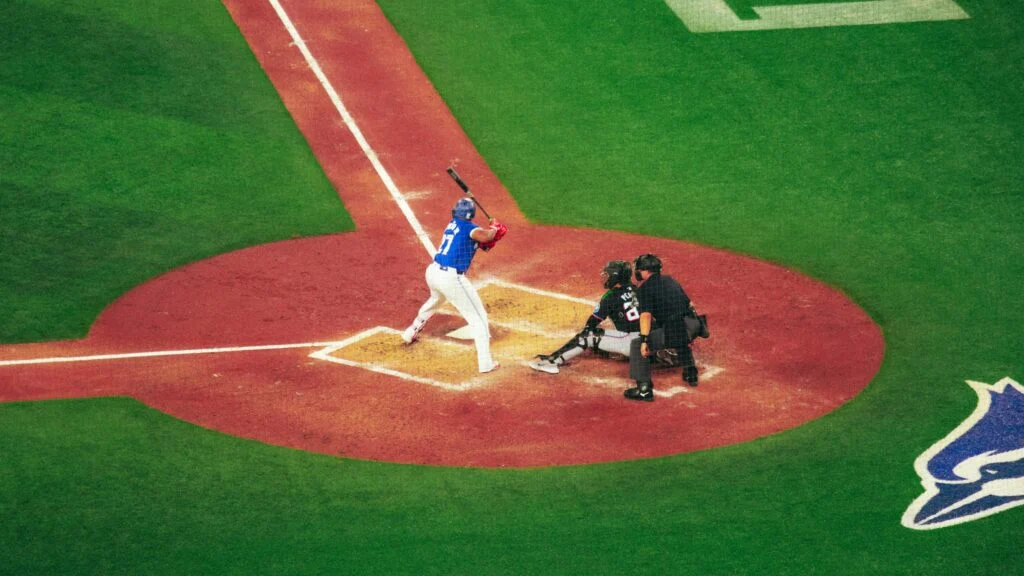
A Blue Jays Fan’s Reflection
As a Blue Jays fan, I’ll never stop marveling at what players achieve under the bright lights of a packed stadium. But as an optometrist, I see those moments differently. Each swing, each connection, is a testament to the power of human vision and the importance of protecting it.
Whether you’re hitting home runs, driving home from work, or helping your child succeed at school, your eyesight is one of your greatest assets.
Final Thoughts & Call to Action
Baseball may be the ultimate vision sport, but its lessons apply everywhere. Great eyesight isn’t just about reading letters on a chart — it’s about living life fully, performing at your best, and enjoying every moment with clarity.
If you or your child are active in sports, or if it’s simply been a while since your last exam, now is the time.
📍 Book your eye exam at Specsavers Spruce Grove today — and make sure your baseball vision is ready for whatever life throws your way.
What eyesight do you need to hit a baseball?
Many MLB players have better-than-20/20 vision, often 20/12 or even 20/10. While not everyone can achieve this, sharp acuity, depth perception, and tracking are essential.
Can you train your eyes for sports?
Yes. Sports vision training, from reaction drills to VR simulations, can improve visual skills.
Do professional baseball players all have perfect vision?
Not always. Some rely on corrective lenses, LASIK, or optometric support to compete.
How fast does the brain process a fastball?
Visual cues are processed within 70 milliseconds, and hitters must decide to swing within 200 milliseconds, as fast as a blink
Should kids get sports vision exams?
Yes. Vision challenges often explain difficulties in sports performance. Comprehensive exams can identify and correct these issues early.