 Dr. Amy Bakelaar
Swimming is one of the best parts of an Alberta summer. But if you wear contact lenses, there is one thing you should do before heading into a pool, lake or hot tub: take them out.
Contact lenses and water are not a safe combination.
Why is water a problem?
Water from swimming pools, lakes, rivers, hot tubs and even household taps can contain bacteria and other microorganisms.
A contact lens can absorb water, change shape or trap contaminants against the surface of the eye. This may cause irritation, scratches to the cornea or a serious infection.
Chlorine helps control germs in swimming pools, but it does not make pool water sterile. It can also disrupt the natural tear film that keeps the surface of your eyes comfortable.
Hot tubs present an additional concern because warm water can create a favourable environment for certain microorganisms.
What is the safest way to swim?
The safest option is to remove your contact lenses before entering the water.
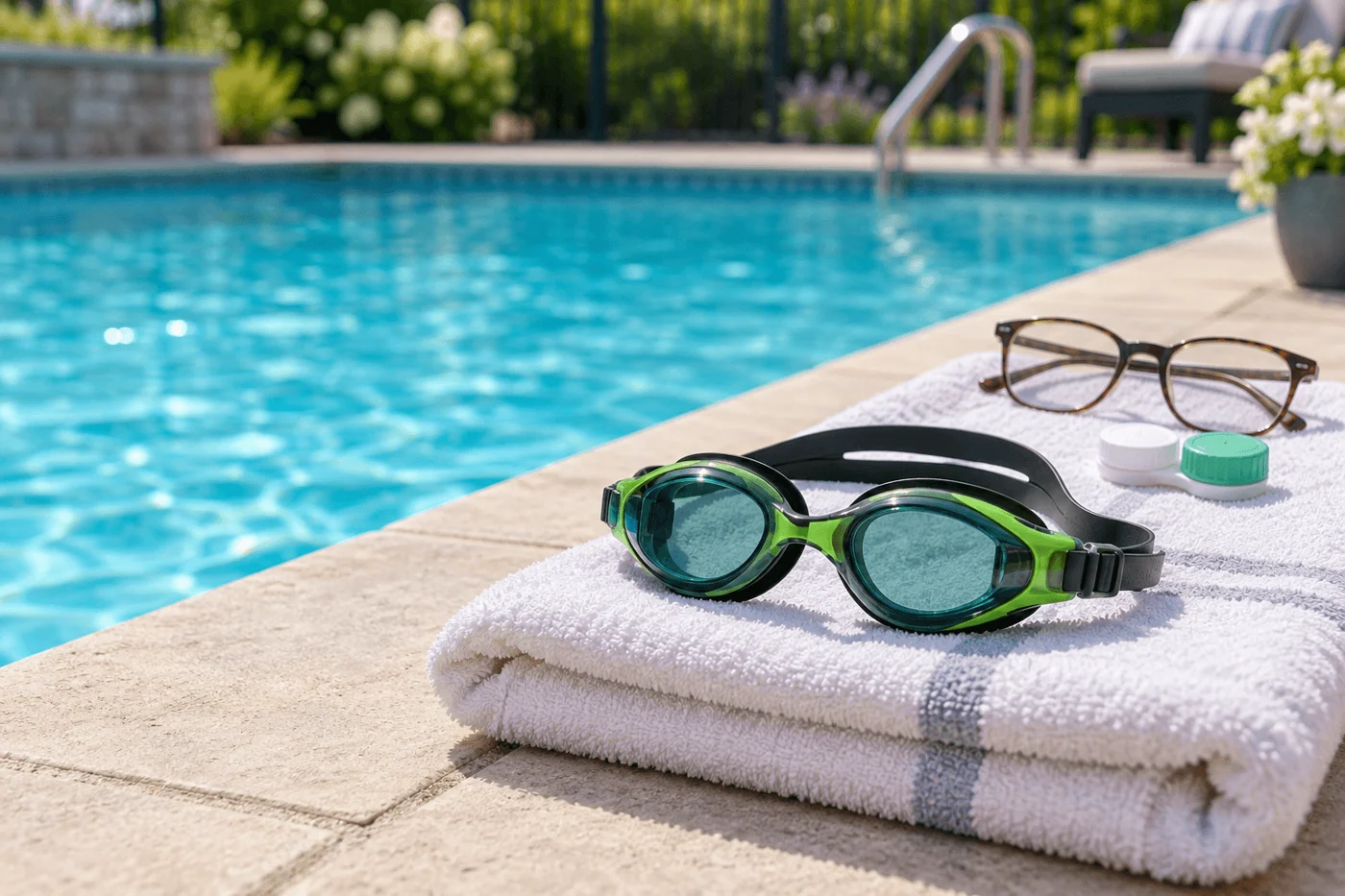
If you need vision correction while swimming, consider prescription swimming goggles. They provide clearer vision without placing a contact lens directly against the eye. Even if you do not require a prescription, properly fitted goggles can reduce exposure to chlorine, contaminants and debris.
Standard sunglasses or eyeglasses are not designed for swimming and should not be considered substitutes for goggles.
What if you accidentally swim in your lenses?
Remove the lenses as soon as it is safe to do so.
Daily disposable lenses should be discarded and replaced with a fresh pair. Reusable lenses should be cleaned and disinfected according to the instructions provided for that specific lens and solution.
Never rinse contact lenses or their storage case with tap water. Do not use saliva to moisten a lens.
If a lens feels dry or stuck after swimming, do not force it off the eye. Lubricating drops approved for use with contact lenses may help the lens move more freely. Contact your optometrist if you cannot remove it comfortably.
Watch for signs of infection
A little temporary irritation after swimming does not always mean there is an infection. However, contact an optometrist promptly if you develop:
- Increasing eye pain
- Significant redness
- Sensitivity to light
- Discharge
- Persistent blurred vision
- Excessive tearing
- The feeling that something is trapped in your eye
Do not put your lenses back in while symptoms are present. Serious corneal infections can progress quickly and should not be treated as something that will necessarily clear up on its own.
Pack your glasses too
Before heading to the pool, beach or lake, pack your glasses, a clean contact-lens case and fresh solution. If you use daily disposable lenses, bring a new pair for after you have finished swimming.
Contact lenses are designed to work with your eyes—not with pool, lake or hot-tub water.
A little planning can protect your eyes without keeping you out of the water.
Book a contact-lens examination with Dr. Amy Bakelaar in Spruce Grove.