 Dr. Amy Bakelaar
Glaucoma is one of the leading causes of vision loss in Canada. What makes it especially concerning is that it can develop without pain, discomfort or noticeable changes to your sight.
By the time someone realizes something is wrong, permanent vision loss may have already occurred.
What is glaucoma?
Glaucoma is a group of eye diseases that damage the optic nerve—the connection that carries visual information from your eye to your brain.
The damage is often associated with increased pressure inside the eye, but glaucoma can also occur when eye pressure falls within what is normally considered a healthy range.
It typically begins by affecting peripheral, or side, vision. Because the change can happen gradually, the brain may compensate and make the vision loss difficult to notice.
Who is at greater risk?
Anyone can develop glaucoma, but the risk increases with age. You may also have a greater risk if you:
- Have a family history of glaucoma
- Have diabetes or certain other medical conditions
- Are very nearsighted
- Have previously injured an eye
- Have used corticosteroid medication for an extended period
- Have elevated pressure inside the eyes
Family history is particularly important. If a parent, sibling or other close relative has glaucoma, tell your optometrist.
Can glaucoma be prevented?
There is no guaranteed way to prevent glaucoma, but detecting it early can make a significant difference.
Vision already lost to glaucoma cannot be restored. However, treatment can often slow or prevent further damage. Depending on the type and severity of the disease, treatment may include prescription eye drops, laser treatment or surgery.
The key is finding glaucoma before it begins affecting everyday vision.
How is glaucoma detected?
Checking eye pressure is important, but it is not the only part of glaucoma screening.
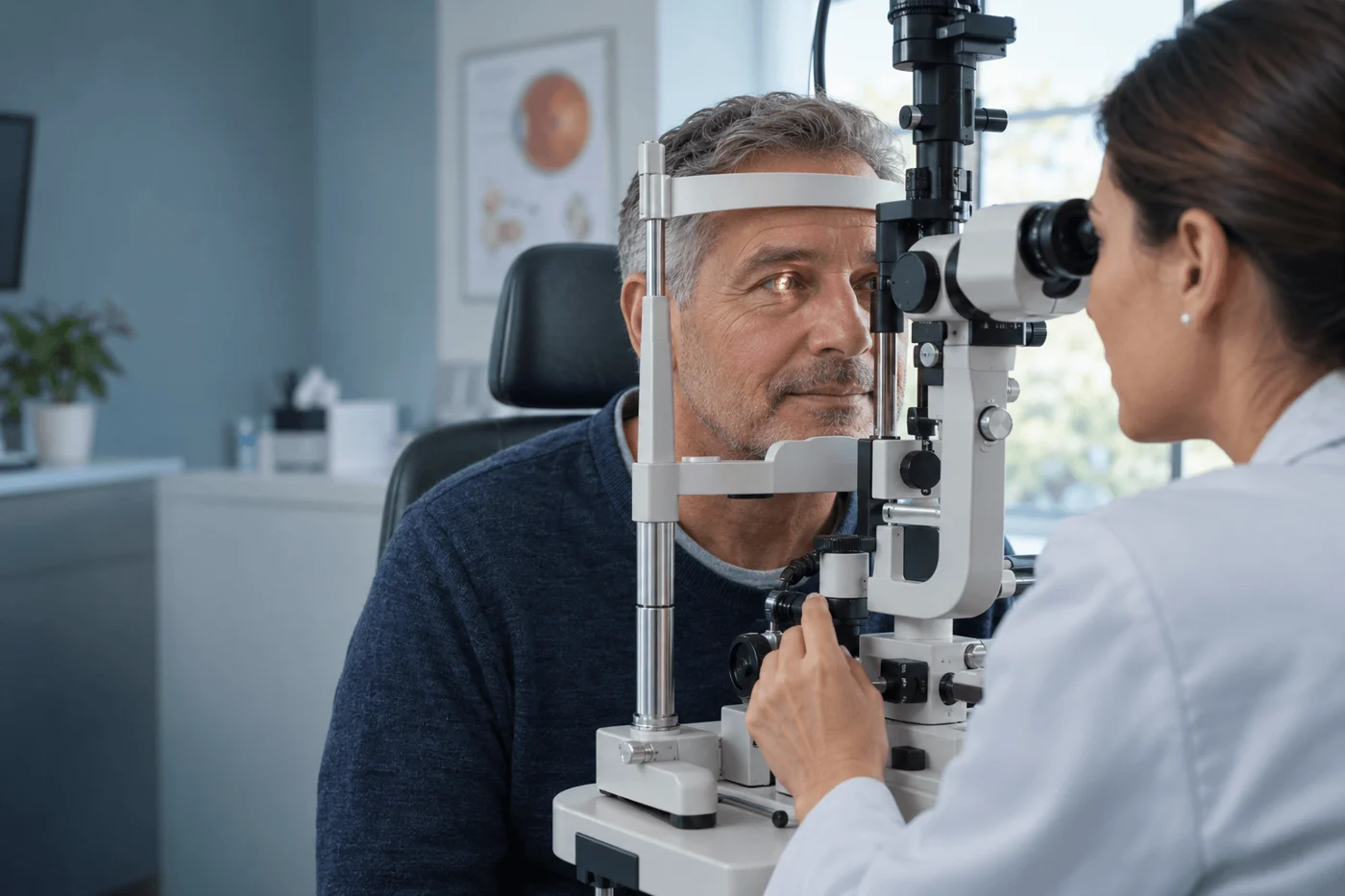
During a comprehensive eye examination, your optometrist can assess the health of the optic nerve, measure eye pressure and examine your peripheral vision. Additional imaging or testing may be recommended if anything appears unusual or if you have elevated risk factors.
This is why a quick vision screening or simply updating a glasses prescription is not a substitute for a comprehensive eye-health examination.
Do not wait for symptoms
Clear vision does not necessarily mean healthy eyes. Glaucoma is a perfect example of an eye disease that may be progressing even while you believe you can see perfectly well.
If glaucoma runs in your family, you have other risk factors or it has been a while since your last comprehensive eye exam, now is a good time to schedule one.
Early detection remains one of our best tools for protecting your sight.
Book a comprehensive eye exam with Dr. Amy Bakelaar in Spruce Grove.