 Dr. Amy Bakelaar
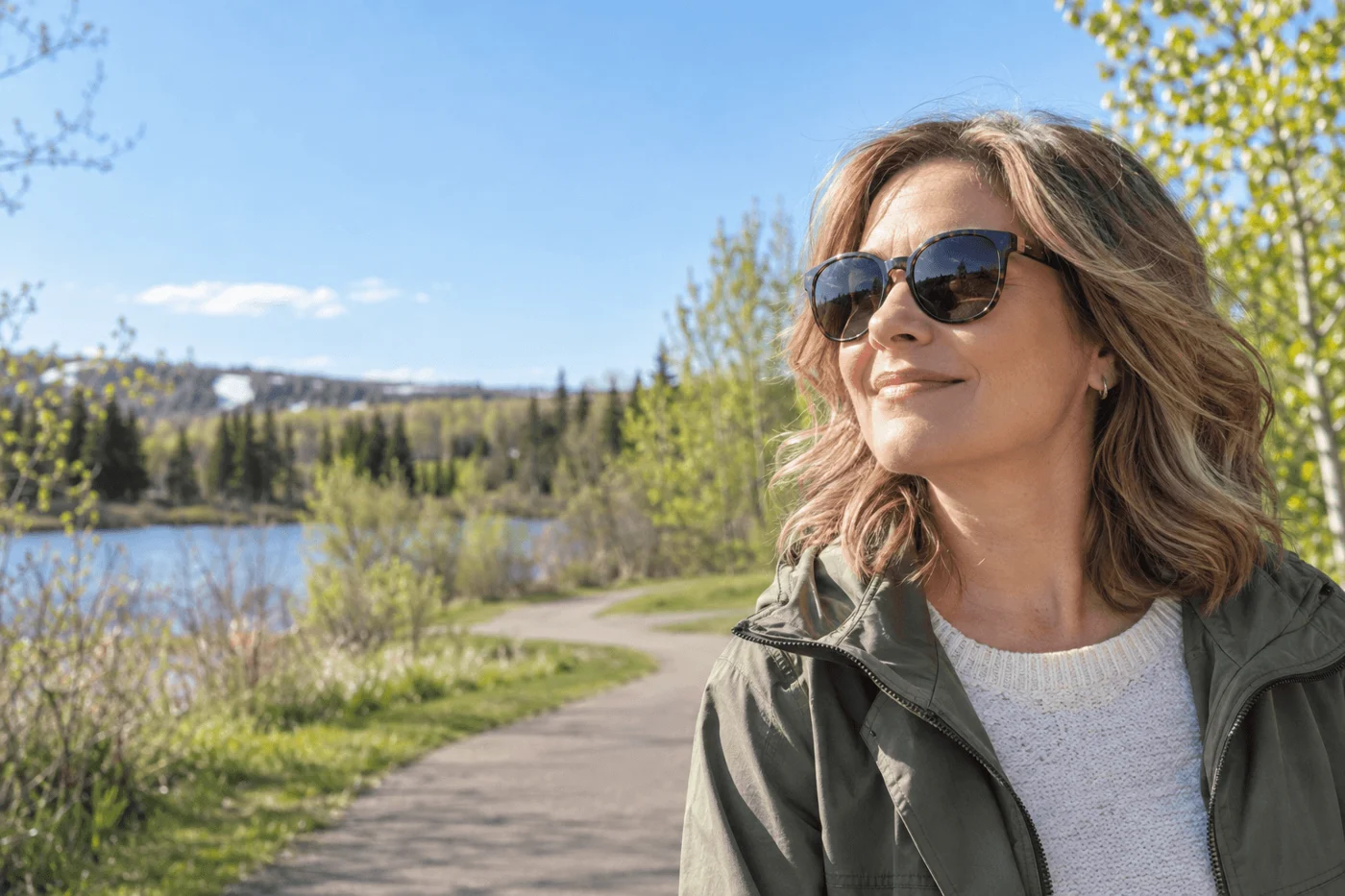
After a long Alberta winter, most of us are happy to see brighter days again. But sunglasses are more than a warm-weather accessory. They are an important part of protecting your eyes from ultraviolet radiation.
UV exposure adds up over a lifetime and can contribute to cataracts, damage to the cornea and other eye-health problems. Your eyes can be exposed even when the temperature is cool or the sky is cloudy.
Darker does not necessarily mean safer
One of the biggest misconceptions about sunglasses is that a darker lens automatically offers better protection.
The darkness of the lens controls how bright the world appears. It does not tell you how effectively the lens blocks ultraviolet radiation. A very dark pair of sunglasses without proper UV protection may reduce visible light without providing the protection your eyes need.
Look for sunglasses labelled as providing:
- 100 per cent UVA and UVB protection
- UV400 protection
You do not need to choose the most expensive pair, but you should know what protection you are getting.
What about polarized lenses?
Polarized lenses reduce reflected glare from surfaces such as roads, water and vehicle hoods. They can make driving and outdoor activities more comfortable, particularly on bright days.
Polarization, however, is not the same as UV protection. A good pair of sunglasses may offer both, but one feature does not guarantee the other. Check the label or ask an eye-care professional if you are unsure.
Fit and coverage matter
UV rays do not reach the eyes only from directly in front of you. Light can enter from above and around the sides of poorly fitting frames.
Larger lenses and wraparound styles provide more coverage. A comfortable, secure fit also makes it more likely that you will wear your sunglasses consistently.
If you normally wear prescription glasses, prescription sunglasses can provide clear vision and UV protection without requiring you to compromise on either. Photochromic lenses may also be helpful, although most do not darken as much inside a vehicle because the windshield blocks much of the UV light that activates them.
Children need sunglasses too
Children often spend more time outdoors than adults, making eye protection especially important.
Choose sunglasses that fit comfortably, stay securely in place and provide verified UVA and UVB protection. Adding a wide-brimmed hat offers another layer of protection.
The best sunglasses are not necessarily the trendiest or most expensive. They are the ones that provide proper UV protection, fit well and are worn regularly.
If you are uncertain whether your sunglasses offer the protection you need, bring them to your next appointment. We would be happy to help you choose the right lenses for your eyes, prescription and lifestyle.