 Dr. Amy Bakelaar
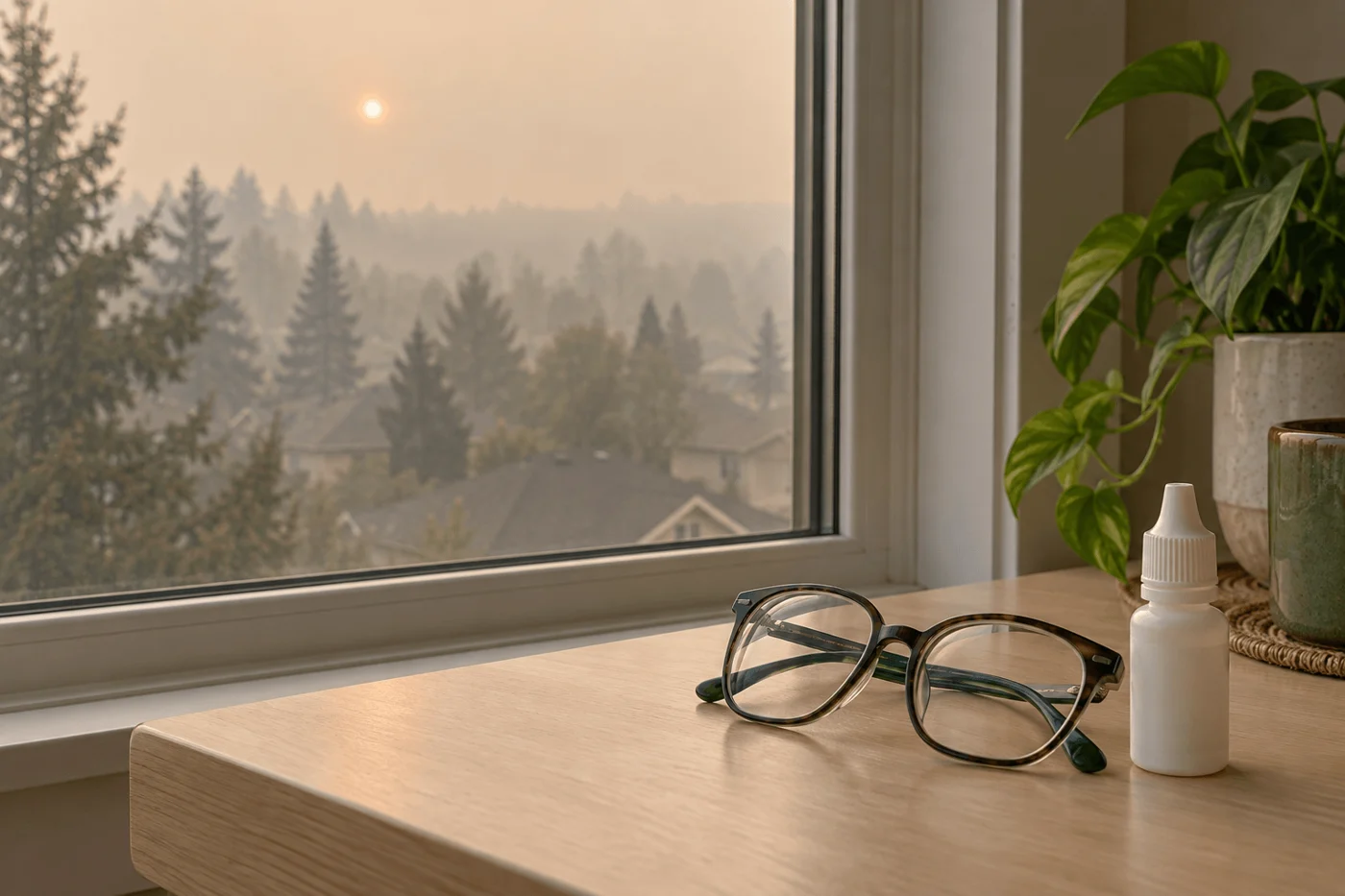
Wildfire smoke has become a familiar part of Alberta summers. We usually hear about its effect on breathing, but poor air quality can also be hard on the eyes.
Smoke contains gases and fine particles that can irritate the eye’s surface. On smoky days, your eyes may feel gritty, watery, itchy or unusually dry. They may also appear red or become more sensitive to light.
For most people, these symptoms improve once exposure decreases. A few practical steps can help in the meantime.
Reduce your exposure
When the air quality is poor, limit unnecessary time outdoors and keep windows and doors closed.
Run an air conditioner or air purifier if you have one, ensuring that the system is not drawing smoky outdoor air inside. Check the local Air Quality Health Index before exercising, working or spending an extended period outdoors.
Wraparound glasses or sunglasses may provide some protection from wind and airborne particles, although they will not filter the air itself.
Do not rub irritated eyes
Rubbing may feel good for a moment, but it can make irritation worse and introduce additional dirt or bacteria.
Wash and dry your hands before touching the area around your eyes. A cool, clean compress placed over closed eyelids may provide some relief.
Preservative-free artificial tears can also help rinse and lubricate the eye’s surface. Not every eye drop is designed for the same purpose, so ask your optometrist if you are unsure which product is appropriate.
Give contact lenses a break
Contact-lens wearers may notice more irritation during periods of heavy smoke.
Particles can settle on the lenses, while dryness may make them less comfortable to wear. Consider switching to glasses until the air quality improves and your eyes feel normal again.
Never rinse contact lenses with tap water. If reusable lenses have been exposed to smoke or debris, clean and disinfect them using the appropriate contact-lens solution. Daily disposable lenses should be replaced with a fresh pair.
When should you call an optometrist?
Smoke can cause irritation, but it should not automatically be blamed for every red or painful eye.
Contact an optometrist promptly if you experience:
- Significant or increasing eye pain
- Sudden or persistent blurred vision
- Strong sensitivity to light
- Thick or unusual discharge
- Symptoms affecting only one eye
- A feeling that something is stuck in the eye
- Irritation that continues after the air quality improves
Seek immediate help if your eye has been injured or exposed directly to ash, chemicals or another foreign substance.
Pay attention to what your eyes are telling you
Burning or watery eyes can be an early sign that smoke exposure is affecting you. Move indoors, reduce your activity and follow local public-health guidance.
Wildfire smoke may be outside your control, but reducing exposure and responding early to symptoms can make smoky days easier on your eyes.
If eye irritation persists, book an examination with Dr. Amy Bakelaar in Spruce Grove.